
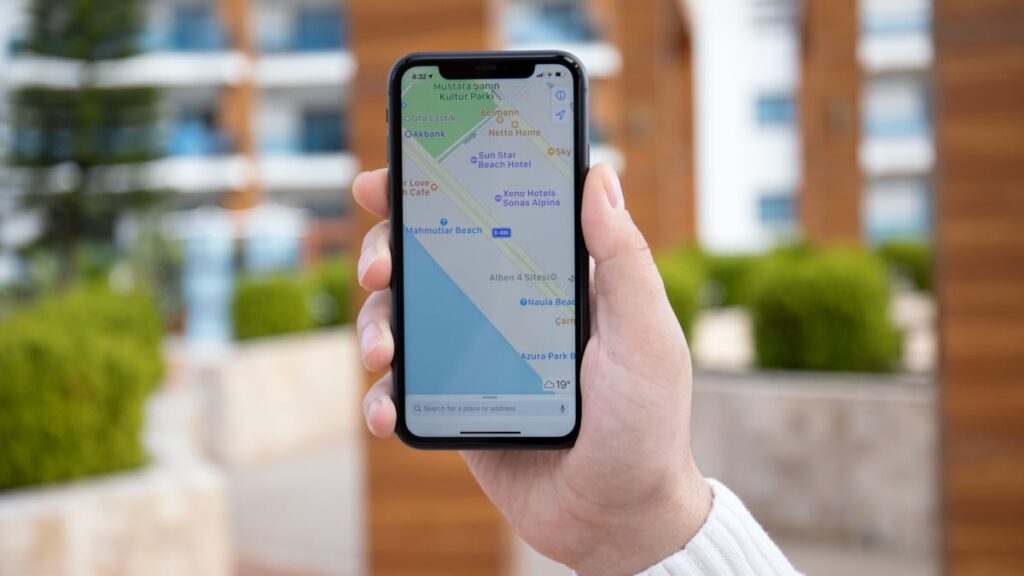
The next time Apple Maps suggests a nearby restaurant, take a closer look, because that recommendation may have paid to be there.
Yes, Apple Maps officially has ads now, and they are beginning to appear alongside the ordinary listings people use to decide where to eat, shop, and go. If your immediate response is to dig through Settings for an off switch, however, don’t bother: There isn’t one.
Users currently have no way to turn off ads in Apple Maps. Paying for iCloud+, Apple One, or another Apple subscription does not remove them either, so customers who already send Apple money every month will see the same sponsored listings as everyone else.
This Tweet is currently unavailable. It might be loading or has been removed.
As Mashable reported on Aug. 26, Apple began rolling out the ads this week after announcing the move in March. They are currently available to users in the U.S. and Canada, with rollout expected to reach everyone in those markets over the coming weeks.
Ads can appear in two places in Apple Maps. Before you search, one may appear at the top of the Suggested Places list. After you search, one may appear at the top of the results if it is relevant to what you entered, according to Apple’s guide for advertisers.
Ads can include three images, one image, or only text. Each carries an “Ad” label and a different place icon, though it otherwise resembles the surrounding recommendations.
You also may not see an ad in every search. CNET, for example, did not consistently encounter them while testing Maps in cities such as New York and San Francisco, and the app does not currently show sponsored pins like Google Maps does.
For now, then, the change is relatively subtle. (Though subtle is not the same as optional.)
Mashable Light Speed
No, turning off personalized ads will not help
Apple allows users to disable personalized advertising by going to Settings > Privacy & Security > Apple Advertising. Unfortunately, flipping that switch will not remove Maps ads or even change the way Maps chooses them.
That is because Apple says Maps does not support personalized ads in the first place. Instead, it serves contextual ads based on what is happening during your current session. That can include your search terms, the section of the map you are viewing, your device’s approximate location, its language and operating-system version, and the time of day.
In other words, searching for “bagels” can surface a nearby bagel shop without Apple building a broader advertising profile around your lifelong relationship with carbohydrates.
Apple also says your location and ad interactions are not connected to your identity or Apple Account. Ad activity is instead associated with a random identifier that changes several times per hour, and personal data is not shared with advertisers or third parties. Apple Pay transactions and information from the Health and Home apps are also excluded from the system.
If you want to know why a particular ad found you, tapping its blue “Ad” label will show the information used to select it. You can also turn off precise location access for Maps, but that only limits location-based targeting. It does not make the ads disappear and could interfere with useful features such as turn-by-turn navigation.
The arrival of Maps ads is not happening in isolation. Apple already sells advertising across the App Store, Apple News, and Stocks, as well as sponsorships tied to its sports programming.
Maps is an especially valuable — and logical — addition because people typically open it when they are ready to do something: find dinner, locate a store, or choose where to spend the afternoon. That gives advertisers a chance to reach potential customers just as they are deciding where to go.
The rollout is tied to Apple Business, the company’s new platform for businesses to manage devices and promote themselves across Apple services. Businesses can claim their locations, upload images and promotional text, set a monthly budget, and pay for a better chance of appearing in search results for nearby users.
That may be appealing to restaurant and shop owners. For Maps users, however, it means paid placement is now mixed into the recommendations they rely on to make real-world decisions.
The reaction has been predictably chilly. As Mashable previously noted, hundreds of commenters in an r/Apple thread argued that the move eliminates one of Apple Maps’ clearest advantages over Google Maps. Others questioned why people paying premium prices for Apple hardware and subscriptions should still be shown ads. As one X user put it, “Apple has officially killed the last clean interface on your iPhone.”
The ads may be limited, privacy-conscious, and clearly labeled. But there are still ads — and even Apple’s paying customers cannot take a different route.