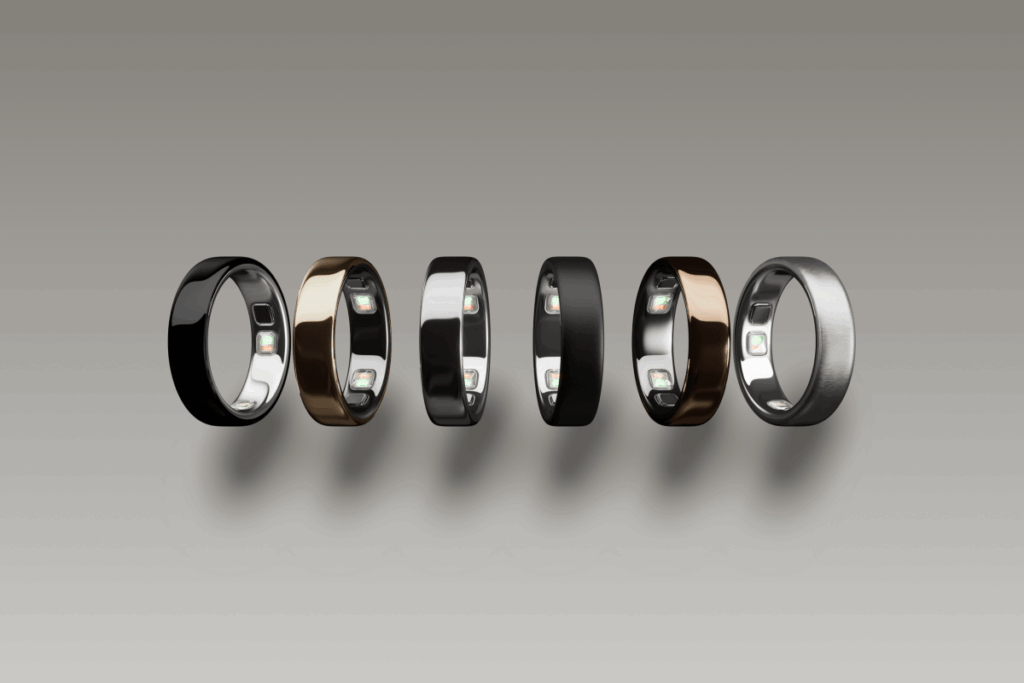
The smart ring market is getting crowded, and Oura isn’t waiting around to see what happens next: it officially filed to go public on September 3.
The company is killing it right now. The Finnish outfit’s revenue nearly doubled to $1.21 billion for the nine months ended June 30. Oura said it sold 3.6 million rings over the past year, and that it has around 5 million paid members. The company’s move to go public follows the recent launch of the Oura Ring 5, its slimmest and lightest ring yet.
But while Oura has largely dominated the smart ring market for years, rivals are emerging from all corners to dethrone it, each betting on a different angle. For example, French company Circular announced this week that its upcoming ring will allow users to tap to pay with their ring, while Chinese company RingConn debuted a ring this year that added haptic vibrations.
Indian company Ultrahuman separately announced this week that it raised $70 million with backing from Qualcomm’s venture arm as it looks to build a ring that it says will be able to run software directly on the device and eventually power everything from AI interactions to games.
The race to beat Oura isn’t just about enhanced health and sleep tracking anymore. It’s now about seeing which company can cram the most smartphone-like features into a two-gram titanium band before someone ends up shipping a ring that lets you doomscroll TikTok or answer calls or do your taxes. I mean, we’re already seeing smart rings with screens, like the Pebble Halo, although it’s currently only available in India, as well as rings that promise touchpads, like the Dreame Ring.
The irony is that the initial appeal with smart rings was that they made technology and health tracking feel less intrusive than devices like smartwatches and smartphones, given you can step away from a screen while still keeping tabs on your health. With the way things are headed in the smart ring industry, though, we may just end up slipping mini smartphones on our fingers.
All of this is to say that the smart ring market is getting increasingly confusing, so we’ve rounded up the most notable contenders vying for Oura’s crown.
Ultrahuman

Earlier this year, Ultrahuman unveiled its third-generation smart ring, the $479 Ring Pro, which is set to begin shipping in the U.S. in mid-September. Ultrahuman’s U.S. business was disrupted in October 2025 after the U.S. International Trade Commission ruled in Oura’s favor in a patent dispute. The ruling prevented the company from importing new ring inventory into the country, so Ultrahuman developed the Ring Pro with a redesigned form factor in order to circumvent Oura’s patent.
The Ring Pro features a redesigned heart-rate sensing system aimed at improving signal quality during sleep, along with a new dual-core processor that enables more accurate data collection and greater on-device processing. As noted earlier, Ultrahuman looks to be more ambitious with future rings as it aims to go beyond sleep and health tracking.
Circular

Circular’s upcoming Ring 3 series, which consists of a Pro model and a Slim option, is expected to launch early next year. Both of the smart rings will feature an integrated NFC chip for contactless payments and on-finger vibrations that can be used for silent wake-up alarms, reminders, vital health alerts, and more.
The Ring 3 Pro features a slimmer design than its predecessor and comes with FDA-cleared ECG for AFib detection, blood pressure trend tracking, glucose tracking, advanced sleep analysis, and comprehensive biometric monitoring.
Pricing for the upcoming rings is not yet available.
RingConn

The RingConn Gen 3, which launched in May and starts at $349, features vascular health insights that use sensor data from the ring to assess changes in vascular strain over time after calibration with externally measured blood pressure values.
It also tracks heart rate, blood oxygen saturation, sleep, activity, and stress, among other metrics. Additionally, it features vibration alerts for health changes, sedentary reminders, and low battery. Unlike Circular, which leans on haptics to make its ring more communicative, RingConn mostly sticks to vibration as a health-alert mechanism.
Samsung

Samsung became the first major tech giant to launch a smart ring in 2024. The Galaxy Ring, which costs $399, is arguably the strongest contender for anyone already invested in Samsung’s ecosystem of devices.
Compared with other smart rings on the market, the Galaxy Ring is relatively basic when it comes to advanced health and sleep tracking. It lacks features such as sleep apnea detection, which are offered by RingConn, Oura, and Ultrahuman, as well as AFib detection, which is available on Circular and RingConn smart rings.
Dreame

Dreame, a relatively new entrant to the smart ring market, unveiled a ring earlier this year with haptic alerts for alarms, calls, messages, and more, along with a small touchpad that lets you do things like skip a song or snap a photo on your phone. It’s also said to offer heart rate tracking, blood oxygen monitoring, heart rate variability insights, sleep analysis, and more.
Pricing and availability have yet to be announced.
When you purchase through links in our articles, we may earn a small commission. This doesn’t affect our editorial independence.