
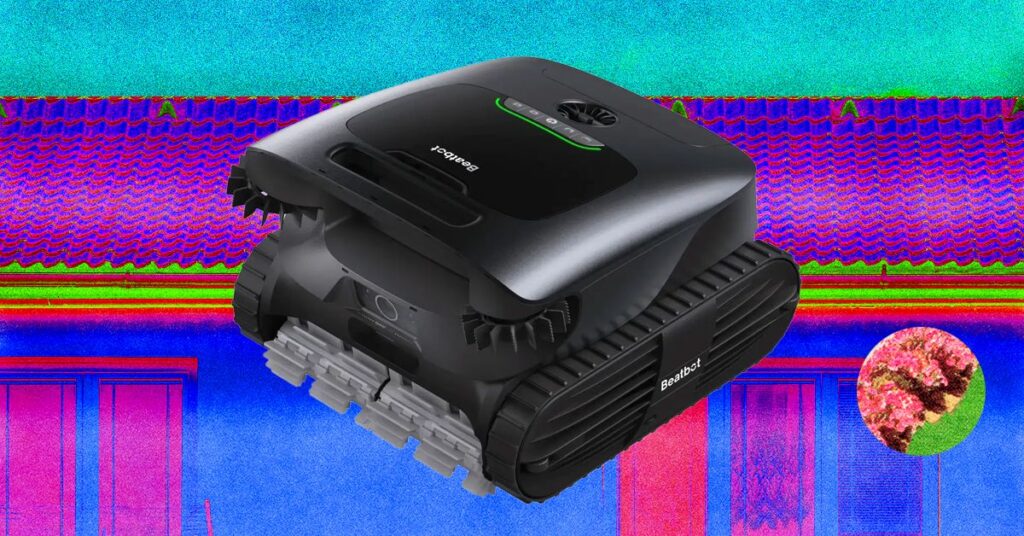
This robot has everything: near-perfect cleaning capabilities (including floors, walls, and waterline), a powerful battery with six hours of charge under the water, AI-powered debris detection, and a solid mobile app. It also has the ability to skim the surface of the pool. When finished cleaning, the AquaSense 2 Ultra floats, so collecting it is just a matter of grabbing it from the comfort of the deck. After a quick cleanup, drop the robot on the included charging stand to juice it back up, no cables required.
What’s not to like? Only two things, really. Monstrous cleaning ability requires a monstrous chassis, and to say the 29-pound Beatbot AquaSense 2 Ultra is unwieldy would be an understatement. Hauling this robot out of the water can be a chore, so work on your forearm curls if you plan to purchase one.
There’s also the price point: At around $3,000 it’s pretty much the most expensive battery-powered pool robot on the market, though plenty of competitors are at least in the ballpark. If your budget’s tighter, you can get most of the same coverage from Beatbot’s Sora 70, which sells for just $1,499.
Pool-Cleaning Robot With the Best Battery Life
The traditional way to use a pool robot is to keep it dry-docked and charging, then drop it into the pool only when you need it. Fish it out at the end of the run, clean the filter basket, and repeat.
An alternative may appeal to lazier pool owners: Drop the robot in the pool and leave it there for a week or two, let it run on a repeating schedule, then clean it out only when the battery is dead.
The trick with this strategy is that few pool robots have a battery big enough to allow for more than one or two thorough cleanings. But with its new M1-AI series, iGarden drops a massive 12,500 mAh battery into its sleek pool bot, allowing up to nine hours of running time in floor-only operation. (It can also do walls and waterline, of course, but that will eat up more of the juice.) The robot also includes cameras that use an AI-powered algorithm to actively scour for debris. In standard mode, the robot first follows an S-shaped path, then it fires up the cams to hunt down anything it missed, making for even more effective cleaning.